OpenAI clients
Expose Chat Completions and Responses-compatible entry points for clients that already use OpenAI-shaped requests.
 SSC-STUDIO / Ai-Model-Gateway
Run OpenAI Chat Completions, Anthropic Messages, and OpenAI Responses-compatible traffic through one self-hosted gateway with local routing policy, fallback, telemetry, config publishing, diagnostics, and rollback.
If this fits your mixed OpenAI and Anthropic gateway workflow, star the repository after evaluation.
Protocol entry points
AI Model Gateway is useful when some clients speak OpenAI-style APIs, some use Anthropic Messages, and operators still need one place to manage provider routing, failure behavior, telemetry, and config rollout.
Expose Chat Completions and Responses-compatible entry points for clients that already use OpenAI-shaped requests.
Use the Messages-compatible endpoint for Claude-oriented workflows while preserving local gateway policy.
Map public models to upstream providers and keep route, fallback, and health behavior inspectable.
Preview, diff, publish, audit, and roll back protocol or provider config changes through the control plane.
Reality check
The gateway focuses on Chat Completions, Anthropic Messages, and Responses-style workflows. It is not a full clone of every OpenAI or Anthropic product API. Start with the 15-minute path, then test the exact client features your application depends on.
./dist/gateway-cli test convert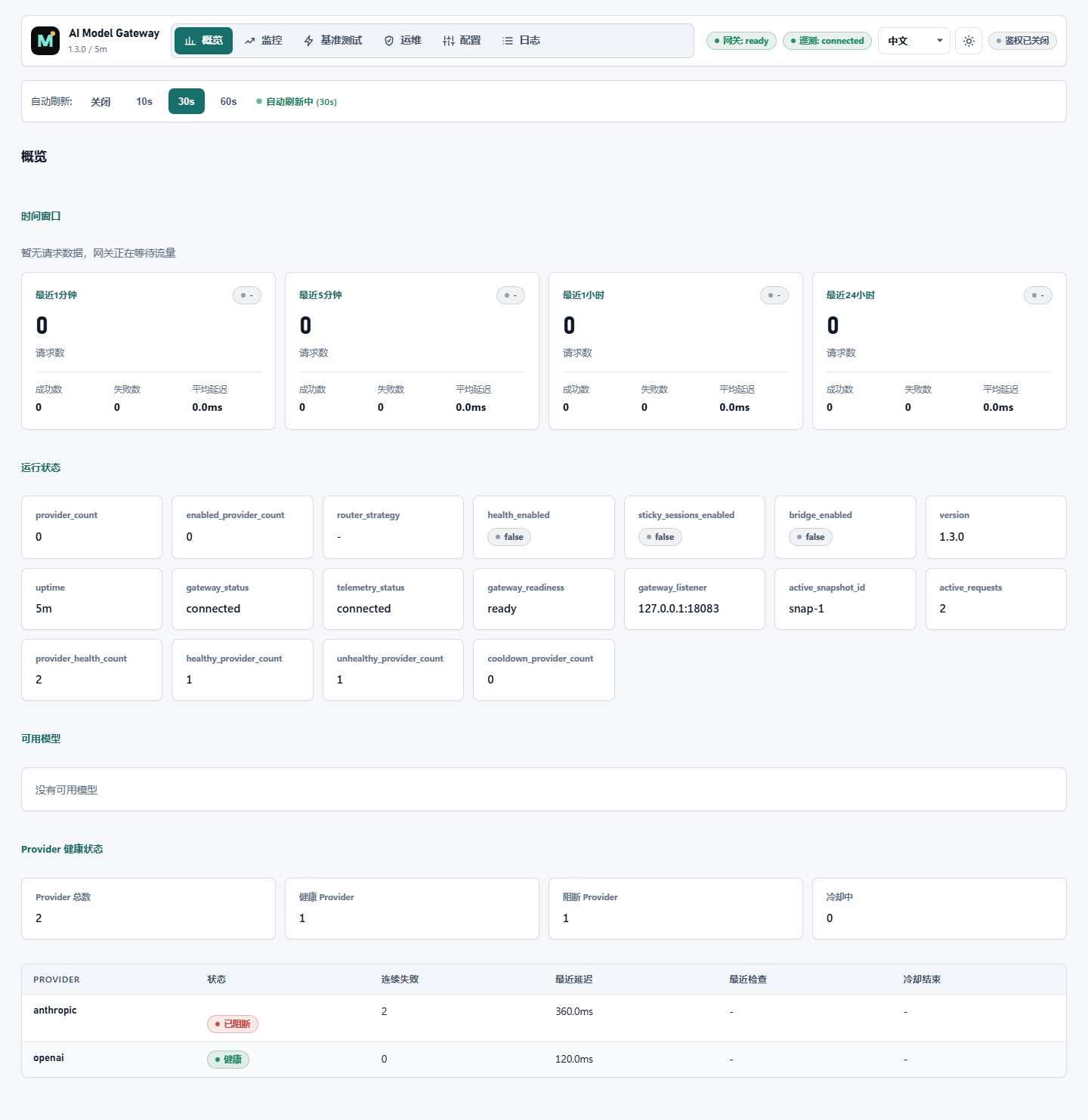
Fit check
Review evidence
Try the packaged v1.4.4 runtime with checksum verification, local config, runtime directories, and supervised startup commands.
Open release install pathReview CI gates, local reproduction commands, runtime smoke checks, feature proof points, and current capability boundaries.
Open quality evidenceInspect admin auth, same-origin browser writes, provider-key handling, SSRF defenses, telemetry sensitivity, and update trust.
Open security modelNext step
Use the evaluation path and provider fallback demo first. If the project fits your mixed OpenAI and Anthropic gateway needs, starring the repository helps similar teams find it.